
Where to start with Election Day! The 2026 midterm elections delivered a decisive victory for Democrats, who reclaimed control of both chambers of Congress and fundamentally altered the political landscape heading into the second half of President Trump’s second term. As of now, Democrats are projected to control at least 54 seats (maybe 2 more) in the Senate, and House Democrats will likely hold as many as 260 seats in the upcoming Congress. Even many incumbent Republicans in favorable Republican districts lost close races. It was clear that voters remained deeply frustrated with the economy particularly the price of everyday necessities such as gasoline, food and other cost-of-living issues.
The election now ushers in another new era of divided government. For the first time, President Trump will govern alongside Democratic majorities in both the House and Senate. Much will now depend on whether incoming Speaker Hakeem Jeffries and Senate Majority Leader Chuck Schumer can manage growing internal tensions, particularly as an influx of new Southern moderates emerges as the Party’s majority makers, while also dealing with the White House.
We held our Bracewell PRG post-election webinar last Wednesday and discussed many of the impacts of the landslide. See the full webinar HERE. I also was on the Julie Mason Show on Sirius XM’s P.O.T.U.S. on Thursday to discuss the energy impacts.
The post-election Congressional Session launches today and permitting reform is first on the docket. Other things that need action or extension include Surface Transportation legislation, NDAA, a slimmed down farm bill and a government funding deadline on December 11th.
The Senate permitting legislation manager’s amendment text emerged on Saturday morning. The reworked version of the Bipartisan Affordability and American Jobs Act aims to address concerns and questions raised about the original bill and will become the official legislative text that ultimately gets a vote in the Senate. Procedural votes are expected as soon as today. Our friends at Heatmap had an excellent, detailed overview of the changes and impacts which you can check out HERE. The Edison Electric Institute, who represents investor-owned utilities, wrote in a letter that it supports the permitting reform bill after new changes, as did environmental group Evergreen Action. Meanwhile, NRDC said they won’t support it even after the changes.
The Chamber of Commerce rolled out a letter with more than 1,000 signers urging Congress to support historic comprehensive permitting reform legislation and send it to the President’s desk as soon as possible.
Speaking of the Chamber, today to Wednesday in DC, they host global business leaders at Washington D.C.’s Wharf District for the B20 USA Summit. Then tomorrow, Daily Caller will hold a forum on permitting reform featuring two panel discussions and a fireside chat with Interior Secretary Doug Burgum. Also, tomorrow morning, Heatmap and ACORE hold a post-election conversation featuring Rep. Scott Peters looking at the new political landscape and the energy agenda ahead.
COP 31 also starts today in Antalya, Türkiye COP31. Let me know if you will be there. The Chamber’s Marty Durbin, BCSE’s Lisa Jacobson (and her team), James Doizer of CRES and Liz Daniels Conservative Climate Foundation will all be there to participate in a number of events. BCSE and EEI will hold a joint event on energy efficiency solutions on Friday. BCSE also discusses advancing progress on energy demand and affordability in the US on Thursday. EESI holds a three-part Rapid Readout briefing series starting tomorrow at 10:00 a.m. with updates from Antalya.
Remember, Wednesday is Veteran’s Day so please thank those who stood and/or are standing in harm’s way to protect our freedoms.
Happy to discuss any or all of the above issues on the agenda this week. Call with questions.
Best,
Frank Maisano
(202) 828-5864
C. (202) 997-5932
FRANKLY SPOKEN
“We don’t have more years to lose as clean energy projects sit on the sidelines.”
Sen. Martin Heinrich told Punchbowl’s Joshua Siegel on Wednesday
“There’s no guarantee Congress would ever find another compromise that would be able to pass the Senate.”
Sen. Sheldon Whitehouse to Politico’s Nico Portuondo.
“Manager’s [amendment] does a good job of accounting for the stated concerns of anybody looking to get to yes.”
Our colleague and veteran GOP political strategist Liam Donovan, in an X post reported by Heatmap.
ON THE PODCAST
Volts: Weighing Through the Election Blue Wave, Climate/Energy Impacts – Last week’s election was a blue wave all the way down the ballot: Democrats took the House and Senate, went from 16 state trifectas to as many as 22, flipped utility commissions, and rejected data centers almost everywhere. Volts’ David Roberts was joined by Caroline Spears of Climate Cabinet to sort through the statehouses, PSCs, and ballot measures. Then we ask the harder questions of whether these new majorities can actually bring down costs and what it all means for climate and energy policy.
FUN OPINIONS
Permitting Needs to Survive Election Day – In an op-ed in The Wall Street Journal, Republican energy strategists Chris Johnson and Liam Donovan write that permitting reform Is an early test for the Democrats. The deeper bargain at hand is certainty. Each side must accept that projects it dislikes might clear the process and proceed. Democrats should be willing to defend the same treatment for a pipeline that they desire for a wind farm. That is the choice now facing the Senate: whether individual projects remain subject to ideological whims, or elected officials set clear rules and accept the outcome. A system capable of building anything ultimately requires faith that a permit means something.
WaPo: Don’t Let Election Get in Way of Permitting – In an editorial, the Washington Post Editorial Board writes Democrats should not walk away from this current clean energy permitting deal.
FROG BLOG
Dealing With Claims About Permitting – Alex Trembath, Executive Director at the Breakthrough Institute, wrote a very interesting take in the Ecomodernist Blog late last week saying on the heels of the Democrats’ historic wave election this week, opponents of congressional permitting reform legislation are arguing they would be better off walking away from the bipartisan deal on the table and crafting more Democratic-friendly reforms next year. Trembath says the political game theory of this strategy is very dumb, noting that Democratic negotiators have encouragingly acknowledged since midterm results came in. Trembath writes over the past several weeks, climate and environmental activists have resorted to a series of misleading arguments, cockamamie analyses and outright bulls–t to make a case against BAAJA.
NCEA Analysis Defines New Direction for Critical Minerals – In a new issue brief, Energy and Materials: A New Synthesis, National Center for Energy Analysis Visiting Fellow Michelle Michot Foss argues that policymakers should move beyond critical minerals lists and ask what services are actually needed from materials. Foss says in an age of strong political division, healthy possibilities exist for building a broader, bipartisan coalition around advanced materials solutions.
FUN FACTS
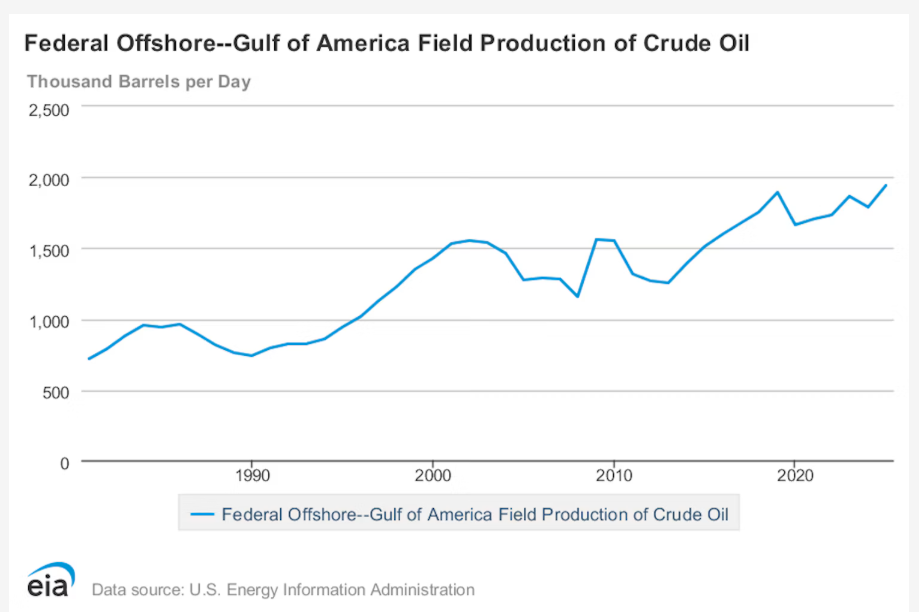
Chamber: South Central Gulf Could Be Huge: The US Chamber’s Christopher Guith notes as the administration prepares to finalize its offshore leasing program, discussions must also consider the immense resources available in the South-Central Gulf. Opening the South-Central Gulf of America to oil and natural gas leasing could support more than 133,000 jobs, $11.3 billion in annual GDP, and more than 470,000 barrels of oil equivalent per day by 2040.
IN THE NEWS
More than 1000 Join Chamber, Industry Permitting Letter As Debate Launches – Late Friday, the Chamber roiled out a letter with more than 1,000 signers urging Congress to pass historic comprehensive permitting reform legislation and send it to the President’s desk as soon as possible. At a time when affordability remains a top concern for American families, there is no greater opportunity to lower costs and improve everyday life than by ensuring needed projects, investments, and other activities can move forward in a timely, predictable, and transparent manner.
More Reports Highlight Benefits of Permitting Reform – The studies continue to emerge:
C2ES/Greenline – A new analysis out Friday from the Center for Climate and Energy Solutions (C2ES) and Greenline Insights says the permitting bill would enable an additional 170 gigawatts of wind, solar and battery storage capacity by 2035. The bill would lower residential electricity bills by $2.5 billion in 2035, it finds. Power sector CO2 emissions would be 13% lower than under a “business as usual” case without the bill.
Employ America – A new study from the group projects the bill could add up to 105,600 industrial jobs through 2040. Employ America conducted an analysis of manufacturing domestic employment requirements and input-output tables to evaluate the impact of the BAAJA on employment in the industrial sector, covering both the investment in renewable energy and transmission infrastructure the bill would accelerate and its effects on energy prices.
National Association of Manufacturers – NAM has a report concluding that the current permitting system is costing manufacturers $12 billion annually. Manufacturers also spend months or years waiting for permits past the deadlines in current law, and they pay for interconnection delays, grid congestion and pipeline constraints on their power bills. Those costs, measured separately, add another $4.1 billion a year, bringing the total to roughly $12 billion a year. Across every sector of the economy, federal permitting costs about $50 billion a year.
Rhodium Group – Two new Rhodium Group analyses show how speeding up permitting and expanding the electric grid could lower household electricity bills. Rhodium’s modeling of the legislation finds modernizing permitting and the electric grid would cut system costs by $82-130 billion.
Revolution Wind Completed, Sending Power to NE Grid – In its earnings call this morning in Denmark, Ørsted said it has fully commissioned its 704 MW Revolution Wind offshore wind farm in the US, which is now delivering electricity to Rhode Island and Connecticut under its offtake contracts. The project reached full commissioning in late October, following the completion of turbine installation and turbine commissioning activities. Revolution Wind began delivering electricity to the New England grid in March 2026. The offshore wind farm is contracted to supply 400 MW to Rhode Island and 304 MW to Connecticut and is expected to generate enough electricity to power more than 350,000 homes and businesses across the two states. Company Announcement HERE: News | Ørsted.
Hillary Bright of the offshore wind advocacy group Turn Forward said:
“Revolution Wind will provide an essential boost of utility-scale electricity to the power-hungry Northeast, delivering a substantial new source of generation, diversifying supply, and strengthening electric reliability for decades. This project is especially important for coastal electricity consumers who know firsthand how challenging it can be to successfully deliver large-scale energy solutions into highly populated areas. Offshore wind projects like Revolution Wind provide an excellent reminder of the economic growth, jobs, and grid stability we create by bringing multi-year energy projects across the finish line.”
ISO-New England welcomed the project in the Providence Journal:
“The commercial operation of Revolution Wind adds a needed new source of electricity supply to New England’s power system,” ISO-NE spokeswoman Mary Cate Colapietro said. Because offshore wind output is often strongest during the winter months, wind energy can enhance grid reliability during periods when electricity demand is elevated, and fuel supplies or other generating resources may be constrained.”
Rhode Island Energy also said the project will help the region in the ProJo.
“Projects like Revolution Wind help strengthen New England’s energy supply and support growing demand while reducing dependence on traditional fuel markets,” spokeswoman Caroline Pretyman said. “In addition, the project’s long-term fixed-price contracts help provide price stability for customers, particularly during periods of energy market volatility.”
Eversource said this on their earning call this morning:
As you may have heard on Ørsted’s earnings call this morning, Revolution Wind has reached its commercial operations date. Construction is now complete and the wind farm is generating electricity. This significant milestone comes at a critical time for our region, where extreme temperatures have underscored how important it is to bring every potential energy source online for customers. This project adds essential new supply that enhances grid reliability, meets growing demand, and ensures dependable power when our customers need it most.
ON THE SCHEDULE THIS WEEK
Congress to Return – TODAY, November 9th
Japan Hosts Underwater Minerals Conference – The 54th Underwater Minerals Conference (UMC 2026) will be held at the Toyama International Conference Center in Japan today through Thursday. The annual international forum, with representatives from over 25 countries that since 1970 has brought the marine minerals community together, is the world’s largest gathering of ocean mineral stakeholders, including government, academic, and commercial sector professionals. Topics considered for the conference include geological and biological studies of marine minerals deposits and their associated biological communities; regulatory considerations related to mineral resource and environmental impact assessment; technological considerations related to scientific survey objectives and commercial recovery objectives and general policy considerations related to the long-term development of these resources.
B20 Summit Set – Today to Wednesday, the US Chamber of Commerce hosts global business leaders at Washington D.C.’s Wharf District for its B20 USA Summit. The B20 USA Campus will feature the big conversations, networking, and unprecedented access to the most influential names in business—taking delegates beyond the headlines to tackle today’s challenges and seize tomorrow’s opportunities.
COP 31 Set for Türkiye – The 31st Conference of the Parties (COP 31) to the United Nations Framework Convention on Climate Change will be held in Antalya, Türkiye UN COP31 today to next Friday. BCSE will lead a coalition of U.S. businesses and energy trade organizations to the COP, as will the US Chamber of Commerce.
RFF Continues Resilient Communities Events – Resources for the Future holds another virtual discussion today at 2:30 p.m. in its series on public finances in fossil fuel communities looking at strategies for fiscal resilience. In this webinar, three researchers will present their work analyzing state and local governments’ dependence on fossil fuel revenues and what risks they might face as the energy system changes, looking at examples of refinery closures, municipal debt during the shale boom, and public finances in coal-heavy West Virginia.
Energy Approps Chair Fleischmann Headlines Nuclear Forum – The U.S Nuclear Industry Council holds its 2026 New Nuclear Capital forum tomorrow in New York. Speakers include a keynotes by Rep. Chuck Fleischmann on bipartisan support for advanced nuclear energy and John Gallagher, senior adviser and deputy chief of staff to the deputy Defense secretary.
Heatmap, ACORE Focus on Post-Election Energy Policy – Tomorrow morning, Heatmap and ACORE hold a forum in D.C. for a post-election conversation about the new political landscape and the energy agenda ahead. The event will look at election results, the latest revisions to the Senate permitting reform bill, and what Congress could deliver before year’s end. From energy affordability and data centers to electricity demand and grid reliability, the event examines how the new political landscape could reshape climate and energy policy over the next two years and beyond. Rep. Scott Peters is among the speakers.
Daily Caller to Hold Permitting Event – The Daily Caller will hold a forum tomorrow on permitting reform, a special event at Daily Caller HQ in Washington, D.C. The event brings together leaders from government and industry to discuss federal permitting reform, domestic energy production, critical minerals, and the policies shaping America’s industrial future. The event will feature two panel discussions, followed by a fireside conversation between U.S. Secretary of the Interior Doug Burgum and Daily Caller Editor-in-Chief Amber Duke.
EPA Nominee Hearing Set – The Senate Environment Committee holds a nomination hearing tomorrow at 9:30 a.m. on Justin Schwab to lead the EPA’s Air and Radiation office.
EESI Starts COP Readouts – EESI holds a three-part Rapid Readout briefing series starting tomorrow at 10:00 a.m. with updates from this year’s UN climate negotiations in Antalya, Türkiye (COP31). Speakers across this series will assess progress made toward climate goals, provide updates on country commitments to reduce greenhouse gas emissions and improve adaptation and resilience, and explain what it all means for U.S. climate policy.
Webinar Looks at Election, Clean Energy Policy – Tomorrow at 3:00 p.m., Advanced Energy United’s Trish Demeter and Dylan Reed hold a special post-election briefing on what happened, what it means for the clean energy transition, and where the industry should focus next. In this free event, moderated by Paul Gerke of the Factor This policy cast, we’ll examine the outlook on Capitol Hill and select states, what’s possible during the period before newly elected officials take office, and the policy and market opportunities that could accelerate advanced energy deployment.
Federalist Society Holds American Exceptionalism Forum – The Federalist Society for Law and Public Policy Studies holds its National Lawyers Convention on 250 Years of American exceptionalism on Thursday to Saturday. Speakers include Secretary of State Marco Rubio, Deputy Energy Secretary James Danley and Deputy EPA Administrator David Fotouhi.
CSIS Looks at Strengthening Grid – On Friday at 11:00 a.m., the Center for Strategic and International Studies holds a virtual discussion on connecting regions and strengthening the grid. The event features a discussion with Julie Mulvaney Kemp, Research Scientist in the Energy Markets and Planning Department at Lawrence Berkeley National Laboratory. The discussion will focus on new research and emerging approaches to electricity transmission policy.
Forum Looks at Data Centers – On Friday at 1:00 p.m., Advanced Energy United and Common Charge holds a webinar focused on new data center models for community benefits. This webinar puts four of those models side-by-side: how they work, how they differ, and what it would take for more states to unlock them at scale.
IN THE FUTURE
USEA to Hold ENERGYTECH Forum – On November 18th, USEA will bring together key stakeholders for EnergyTech Connect 2026 to tackle the critical infrastructure challenges of next-generation computing. The program will explore grid capacity, permitting and regulatory hurdles, system reliability, and the rapidly growing energy needs of advanced computing and data centers. Join us to gain insights from industry leaders and help shape the future of energy infrastructure.
Wright to Headline Trans-Atlantic Cooperation Discussion – In partnership with DOE and the Polish Ministry of Energy, the Atlantic Council Global Energy Center hosts the 7th Partnership for Transatlantic Energy Cooperation (P-TEC) in Warsaw, Poland. On Wednesday, November 18th, the business forum will bring together public and private sector leaders to discuss transatlantic energy investment priorities, as well as collaboration on strategic energy projects. On Thursday, November 19th, the P-TEC ministerial will convene high-level government representatives to discuss the future of transatlantic energy cooperation, with a focus on civil nuclear energy and long-term LNG supply security.
Forum to Address EV Future – The Electrification Coalition holds a post-election briefing on Thursday November 19th at 2:00 p.m. to discuss the results and what they might mean for future EV policy. A team of political experts, including AAMA head Mitch Bainwol, Andrew Wishnia and Aaron Viles, will break down the new balance of power in the 120th Congress, leadership changes on key committees like House Transportation & Infrastructure and Senate Environment and Public Works, and what to expect during the lame-duck session. The event will look at how gubernatorial and legislative races in key states will shape issues like competitive fuel standards, state fleet electrification, utility policy and EV taxes.
BCSE to Talk Mid-term Results – The Clean Energy Business Network and BCSE hold a post-election webinar on Thursday November 19th at 2:00 p.m. reviewing the results of the midterm elections and exploring what they could mean for federal energy policy in the next Congress. Hear insights from leading political consultants and energy experts on both sides of the aisle. Our friends Liam Donovan and Heather Reams speak.
RE+ Set for Las Vegas – RE+ 26, North America’s largest clean energy event, will be held on November 16th to 19th at the Las Vegas Convention Center. The event will spotlight clean energy’s critical role in meeting the rapidly rising demand for power across the U.S. and around the world. Developed by the nation’s leading clean energy organizations, the Smart Electric Power Alliance (SEPA) and the Solar Energy Industries Association (SEIA), RE+ reflects an ongoing entrepreneurial approach to renewing best practices across the clean energy landscape as the marketplace evolves.
Wright Headlines NA Gas Forum – U.S. Secretary of Energy Chris Wright will headline the North American Gas Forum in a keynote fireside chat on Monday November 30 to Wednesday December 2. With demand from AI and industry rising, Wright will speak to where natural gas fits in U.S. strategy for reliable power, manufacturing, and global energy security. He will also address how policy balances production growth, affordability, and reliability, as well as what it will take to get pipelines, large-scale energy campuses, and LNG projects permitted and built.
Forum Looks at Court Actions – On December 1st, NYU’s Institute for Policy Integrity holds a forum on tracking major rules in the courts. In this webinar, experts from the Institute for Policy Integrity and other prominent legal scholars will present original analysis of the data from our Major Rules in the Courts project and identify implications for legislative and executive reforms. Speakers joining Secretary Wright include National Energy Dominance Council’s Jarrod Agen, DOE Office of Energy Dominance Financing Director Greg Beard, EQT CEO Toby Z. Rice, Williams CEO Chad Zamarin and many more.
Forum to Look at State Capacity on Enviro Policy – The Environmental and Energy Study Institute (EESI) and the Center for Regulatory Ingenuity at the Federation of American Scientists (FAS) hold a briefing on December 2nd about how states can lay the foundation for a new era of federal environmental policy that is effective, durable, and popular. This briefing will delineate the components of a durable environmental policy framework, including effective institutional design, a climate-ready workforce, strong public participation and stakeholder engagement, streamlined administrative processes, and outcomes-oriented program delivery. Panelists will also discuss how new policies can address capacity and implementation challenges for both near-term and longer-term legislative priorities.
Government Funding Deadline – December 11th