
Energy Update: Week of June 30th
Energy Update - June 30, 2025

Friends,
Here we are on the eve of July 4th and instead of running off to the beach this week, we are here on the edge of our seats wondering if the Senate will pass a final bill, what changes will they make, will the House accept the Senate changes and where and how does the President weigh in and throw his political power into the effort to move his signature agenda items.
While there are still mega doubts about the mega bill, the Budget Reconciliation might make the President’s self-imposed July 4th deadline. The Senate is hoping to pass the legislation later today so we’ll see.
Here is the latest Senate text before any amendment changes (vote-a-rama is ongoing). Senate Republicans on Saturday narrowly voted to advance a sprawling 1,000-page bill to enact President Trump’s agenda, despite the opposition of several GOP lawmakers. Two Republicans voted against advancing the package: Sen. Rand Paul (R-KY), who opposes a provision to raise the debt limit by $5 trillion and Sen. Thom Tillis (R-NC), who opposed it over Medicaid funding, among other things. Then, Senate clerks read the entire legislation over 12-hours on Sunday, a stalling tactic employed by Minority Leader Chuck Schumer.
Most of the ongoing vote-a-rama is a Democrats’ show. Schumer kicked things off with a theme of the day: forcing Republicans to vote on a measure focused on not increasing “costs for working families and small businesses to pay for tax cuts for billionaires.” Other votes will target Medicaid, rural hospitals and clean energy provisions. The other news on the clean energy side is an amendment by Sen. Curtis that is a tight, surgical amendment that:
• Locks in “beginning of construction” as the operative standard for claiming and phasing out clean electricity credits
• Enforces FEOC compliance through both disqualification and a new excise tax
• Structures a tiered phaseout of wind and solar credits beginning in 2026
Don’t know where it lands but noteworthy that it is happening. Can send more details if you want them.
Final votes are expected this evening, but it is still not clear that everyone that supported the effort to end debate will vote for the final bill. If they do, the Senate will then leave town for the July 4th recess.
House Majority Leader Steve Scalise said it’s most likely that his chamber returns tomorrow, Wednesday if there are delays, to vote. Right now, the pressure is on Speaker Johnson to weave together the votes. The House Rules Committee is expected to meet tomorrow, hoping the chamber can hold its first floor vote Wednesday. This gives Johnson and his team two full days to try to get the reconciliation plan through. Plenty of House Freedom Caucus members will gripe over being jammed by the Senate, but remember: if they do force additional changes, it will likely mean they cost Trump his July 4 deadline – and thus likely to incur his wrath. President Trump spends the week twisting arms and lobbying Congressional Members to support his agenda in the Reconciliation Package as he preps for fireworks on Friday. Those opposed need not expect invites to the Truman Balcony or South Lawn.
Speaking of the fireworks and summer concert on the Mall, I always urge you to attend if you have never been there. It is a spectacular show and musical performance. There is nothing like the 1812 Overture and the National Fireworks. It is an experience that you must have in your quill.
Aspen Ideas Festival has been going since last week and ends tomorrow. There have been a lot of good panels and speakers. Check out the details here.
Finally, check out a new Punchbowl feature this week. The insider political newsletter had the first edition of its State of Play editorial content focused on the future of energy, with Duke Energy as a sponsor. In this first edition, they explore the way energy production is evolving and how policymakers are working with the industry to address the growing power demands.
Call with questions.
Best,
Frank Maisano
(202) 828-5864
C. (202) 997-5932
FRANKLY SPOKEN
“If the goal is to end the tax credits and to achieve the savings, which we believe that we do, only with better treatment for the businesses who have already deployed capital, I don’t know what the problem is."
Sen. Thom Tillis (R-N.C.) told POLITICO when discussing the Senate Version of clean energy tax credits.
“We’re simply not building generation fast enough and we’re not keeping the generation that we need to keep. This week some of our systems came really close to the edge."
FERC Chair Mark Christie.
ON THE PODCAST
Reams Joins USEA Podcast on Energy Successes – In today’s episode of the USEA Power Sector Podcast series on groups leading the emergence of 21st century power, Citizens for Responsible Energy Solutions President Heather Reams discusses CRES’s achievements, current topic focuses, and current policy targets.
Climate Realism on RFF Podcast – In this episode of RFF’s Resources Radio, host Daniel Raimi talks with Varun Sivaram, senior fellow at the Council on Foreign Relations and founder and CEO of Emerald AI. Sivaram discusses “climate realism”—a controversial new approach to US climate policy. Sivaram addresses contentious claims about the feasibility of reaching global climate targets, US contributions to global emissions, the economic benefits of the clean energy transition, and more.
FUN OPINIONS
Utah Could Lead a Hydrogen-Powered Future – In an op-ed in the Deseret News, Utah State Sen. Dan McCay writes hydrogen already commands a $150 billion global market — one that’s about to explode. America is positioned to lead, but only if we don’t fumble the ball at the goal line. Without the 45V incentive, many of these innovative, early-stage technology projects will become economically unviable overnight. It’s like discovering oil, then deciding not to drill.
FROG BLOG
Fred Smith: A Business Pioneer, Energy Policy Influencer – In an opinion tribute in RealClearEnergy, SAFE Founder Robbie Diamond writes that Frederick W. Smith, the Founder and long serving Chairman and CEO of FedEx Corporation, who passed away this weekend, was a maverick willing to take on ideological blinders and special interests. He had iconically pushed for strategic deregulation of the airline and trucking industries, but he was a passionate advocate for fuel economy reforms and strengthened regulations. A free-market champion and business icon, Mr. Smith saw government intervention as necessary to counter oil market manipulation from OPEC+, the “clumsy cartel.” Always looking ahead, he was also an early advocate for electric vehicle incentives before the technology was mainstream.
FUN FACTS
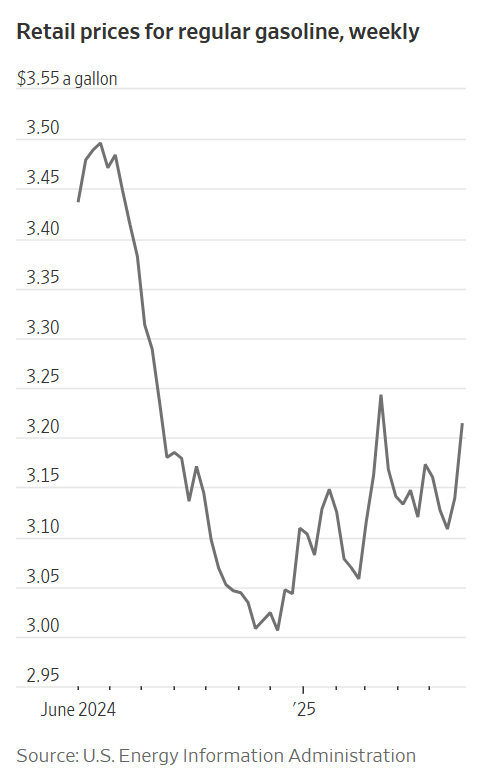
Gas Prices are Actually Lower: The national average for a gallon of regular gasoline, $3.21, is about 23 cents cheaper than this time last year, according to data from the U.S. Energy Information Administration. Analysts say plentiful supply is expected to keep prices down in the coming months even with turmoil in the Middle East.
IN THE NEWS
Bessent Deal Knocks out Section 899 “Revenge” Tax – The world’s leading economies have agreed a deal to spare the US’s largest companies from paying more corporate tax overseas, taking a giant funding hole out of the House Senate Budget reconciliation package and meanwhile potentially undercutting the status of the biggest global tax deal in over a century. The shift came after the US included provisions, referred to as Section 899, that would have allowed the US to retaliate against alleged discriminatory taxation elsewhere by imposing “revenge taxes” on foreign investments. US Treasury Secretary Scott Bessent promised if they could forge a deal at the G7, he would ask Congress to remove the revenge tax measures from the US legislation because of the impending changes to the OECD deal. In short, the Senate removed the “revenge tax” (section 899) from the latest text, which is a major win for foreign companies that invest in America. Jonathan Samford, president & CEO of the Global Business Alliance (GBA):
“This is what leadership looks like: Choosing economic strength over squandered opportunity, investment over isolation, and American workers over misguided tax hikes. Thank you, President Trump and Secretary Bessent, for reinforcing America’s economic competitiveness on a global stage.”
The so-called revenge tax, which had stirred debates on Wall Street and law firms across the Atlantic, is moot before it even went into effect.
Some Thoughts on the Senate Draft from Advocates – There were a bunch of folks who weighed inover the weekend on the Senate Changes:
- Hydrogen Tax Credit extended for two years – The hydrogen tax credit runs through January 1, 2028
Frank Wolak, head of the Fuel Cell & Hydrogen. Energy Association, released the following statement on the Senate Budget reconciliation text related to the hydrogen tax credits (45V) released this morning
“FCHEA is proud to have played a central role in helping restore the critical Section 45V hydrogen production tax credit. We commend our incredible Senate champions – particularly Senators Shelly Moore Capito and Bill Cassidy – for recognizing hydrogen’s unique potential to create jobs, drive investment, and strengthen our nation’s energy security. By working to restore these incentives and providing the U.S. hydrogen industry with the flexibility it needs to invest and grow, Congress is poised to send a clear signal that the United States is serious about competing in the global clean energy economy.
“Extending the commencement of construction date to January 2028 for the hydrogen production tax credit gives the industry an opportunity to advance a significant round of projects that will jump start the U.S. hydrogen market, including the crucial Regional Hydrogen Hubs.
“The extension reflects the efforts of FCHEA and the coordination of organizations from multiple energy sectors who came together to support a reasonable, commonsense policy solution. Completion will result in a victory for U.S. energy and manufacturing leadership.”
- Tax Credit Revisions Surrender America’s Command of Defense-Critical Energy Technologies – Changes to energy tax credits in the Senate’s newly revised OBBA (One Big Beautiful Bill Act) would jeopardize financing and deployment of reliable, defense-critical energy technologies at a time when the nation needs every available energy source to meet surging demand and protect national security. Avery Ash, SAFE’s Senior Vice President of Government Affairs, issued the following statement:
“The new language means many energy storage, mineral processing, and energy generation projects won’t be able to secure financing or move forward given the steeper cliffs and unworkable foreign entity restrictions. Where the original Senate version was a recipe for energy stagnation, this is outright energy surrender—all but guaranteeing Chinese dominance of critical minerals, industrial supply chains, and AI development. It snatches defeat from the jaws of victory. The Senate must reject this language.”
- Chamber Weighs in on New Business Tax on Renewables – The US Chamber of Commerce’s Neil Bradley expressed concerns on X regarding the latest Senate Budget legislation’s new tax on renewables:
“Overall, the Senate has produced a strong, pro-growth bill. That said, taxing energy production is never good policy, whether oil & gas or, in this case, renewables. Electricity demand is set to see enormous growth & this tax will increase prices. It should be removed.”
- API Sees Many Positives in OBBB For Oil, Gas – On X, API CEO Mike Sommers said the bill will create opportunities for energy dominance:
We urge the Senate to pass the One Big Beautiful Bill to bolster America’s energy advantage and support economic growth. This historic legislation will help usher in a new era of energy dominance by unlocking opportunities for investment, opening lease sales and expanding access to oil and natural gas development.
- ACP: Bill Undercuts Success Story – The American Clean Power Association (ACP) CEO Jason Grumet said the Senate version would harm clean energy in the US. The latest Senate text imposes new taxes that would freeze energy investments, reduce domestic energy production, and drive-up household energy bills.
“With no warning, the Senate has proposed new language that would increase taxes on domestic energy production. In what can only be described as ‘midnight dumping,’ the Senate has proposed a punitive tax hike targeting the fastest-growing sectors of our energy industry. It is astounding that the Senate would intentionally raise prices on consumers rather than encouraging economic growth and addressing the affordability crisis facing American households These new taxes will strand hundreds of billions of dollars in current investments, threaten energy security, undermine growth in domestic manufacturing and land hardest on rural communities who would have been the greatest beneficiaries of clean energy investment. We urge Senate leadership to strike these last-minute tax increases and to take the time to responsibly analyze the impacts of this new tax regime on American businesses and communities.”
House Members Urge Support for 45Z SAF Provisions – Seven farm-state House Republicans told Senate Finance Chair Mike Crapo (R-Idaho) in a letter that they want the megabill to reflect House-passed language bolstering the clean fuel production tax credit known as 45Z. The lawmakers include Reps. Randy Feenstra (R-Iowa), Ashley Hinson (R-Iowa), Mariannette Miller-Meeks (R-Iowa), Zach Nunn (R-Iowa), Brad Finstad (R-Minn.), Michelle Fischbach (R-Minn.), and Max Miller (R-Ohio). They want the Senate to keep their current language that expands the tax credit through 2031, but also make changes to align with House language that ensures domestic producers, not foreign suppliers, are the beneficiaries of 45Z and creates an additional SAF-specific bonus credit. The Senate altered the credit to lowered to the same amount for all fuels. Unfortunately, that is likely to undercut the SAF market which clearly is not a mature as renewable diesel and other biofuels markets. We’ll see what happened In the House as the bill comes back this week.
Coal Residuals Important to Economy – The American Cement Assn sent a Letter to Congressional Leaders on the panel on beneficial reuse policy of coal ash residuals. ACA’s Sean O’Neill says “EPA should revise its policies to support responsible CCR reuse, especially from legacy sites. This approach would allow for continued oversight while promoting environmental stewardship, resource efficiency, and industrial competitiveness. Providing sufficient time prior to final closure of impoundments would enable safe, beneficial use of CCRs, helping to meet energy needs, emissions goals, and infrastructure demands.”
US China sign Critical Minerals Agreement – The US and China have signed a trade framework including licensed exports of Chinese rare-earth magnets to U.S. automakers and manufacturers. China says it will review and approve eligible licenses for items subject to export control rules, while the U.S. will correspondingly cancel a range of existing restrictive measures imposed against Beijing, SAFE’s Center for Critical Minerals Strategy’s Executive Director, Abigail Hunte said:
“While details still need to be confirmed, any agreement on Chinese rare earth magnet exports is not reprieve—it’s a reminder. While this measure may offer limited, short-term relief to U.S. manufacturers, it underscores just how exposed we remain to geopolitical leverage over materials essential to our national defense, energy systems, and advanced technologies. China’s ability to dictate access to rare earths reinforces the urgency of reshoring and diversifying our supply chains. America must not build the industries of the future atop dependencies of the past. This moment demands more than stopgaps. It demands permanent solutions: investments in U.S. midstream and magnet capacity, long-term policy certainty like the 45X tax credit, and strategic alignment with allies to build secure, resilient alternatives. If we’re serious about energy dominance and industrial competitiveness, we must treat this vulnerability not as a trade issue—but as a national security imperative.”
Heidelberg Sells Out Low Carbon Cement – Global cement-maker Heidelberg announced it sold out of all low-carbon cement it will produce at its cement CCS facility in Norway, highlighting strong demand for low-carbon materials. The CO2 capture facility at Heidelberg's factory in Brevik, southern Norway, will capture around 400,000 metric tons of CO2 per year. That represents 50% of the plant's emissions, allowing for the production of a net-zero product dubbed evoZero, Heidelberg CEO Dominik von Achten told Reuters at the facility's official opening. The Brevik plant has annual production capacity of just over one million tons of cement, around half of which will be produced under the evoZero brand.
ON THE SCHEDULE THIS WEEK
July 4th HOLIDAY – District Work Period July 2 - July 10
IN THE FUTURE
Book Forum TALKS Energy Insecurity – The Columbia Center for Global Energy Policy and Resources for the Future (RFF) hold a forum in Washington on Monday July 7th at 6:00 p.m. for a conversation with Powerless author and Co-Director of the CGEP Energy Opportunity Lab Diana Hernández and Founding Director Jason Bordoff on the hidden crisis of energy insecurity in America. The event will explore the book's key findings and bold policy solutions to ensure affordable, safe energy for all. Opening remarks by RFF's Carlos Martín.
Opportunity Forum Set – The Energy Opportunity Forum, now in its third year at Columbia’s Center on Global Energy Policy, will be held on Tuesday July 8th at 9:30 a.m. The forum bring leaders together to discuss the future of navigating and advancing energy access, affordability, and sustainability both domestically and globally. Through a series of conversations, the Forum will explore innovative policy approaches, new models for public-private and philanthropic collaboration, and practical solutions to ensure energy remains a driver of economic resilience and equitable development in a rapidly changing world. Speakers include former US Treasury Deputy Secretary Wally Adeyemo, RFF’s Billy Pizer and Jason Bordoff.
EPA Public Hearing on GHG Rule Set – EPA will be holding a virtual public hearing on Tuesday July 8th on EPA’s proposal to repeal all greenhouse gas (GHG) emissions standards for fossil fuel-fired power plants.
Homestead Headlines Bracewell EPA GHG Rule Discussion – Bracewell will host an Environmental Essentials Webinar on Tuesday July 8th at 9:30 a.m. on EPA’s proposed repeal of the carbon pollution standards for power plants and the implications for the rest of industry. In this webinar, Jeff Holmstead and Brittany Pemberton will briefly discuss the thinking behind the proposed finding and the likelihood that it will stand up in court. They will also analyze the implications of such a finding for other industry sectors – over the next four years and in a future Democratic administration.
USEA to Look at Israel-Iran Energy Conflict – The US Energy Assn holds a forum on Thursday July 10th at 11:00 a.m. to understand how global tensions intersect with America's robust energy position. This crucial event will provide an in-depth analysis of the Israel-Iran conflict, its potential impacts on global energy markets, and the remarkable resilience of US energy security. Expert speakers, including Chamber and Liquid Pipeline Assn execs, will cover historical context, market responses, and US strategic capabilities, offering invaluable insights into navigating today's complex geopolitical landscape.
RNG, SAF Summit Set for Houston – Infocast’s RNG and SAF Capital Markets Summit will be held on July 16th and 17th in Houston. The event will feature equity investors, debt providers, developers, and key market players across RNG and sustainable aviation fuel (SAF). These industry leaders will provide strategies to successfully navigate the challenges facing these projects, and fund industry growth.
USEA Hosts Advanced Technology Showcase – The US Energy Assn holds its Advanced Energy Technology Showcase and Policy Forum on July 17th at the Ronald Reagan Trade Center. The event will explore the exciting evolution of cutting-edge energy technologies. This engaging event will illuminate their journey from discovery to deployment, showcasing how smart public and private investments are accelerating innovation.
Congressional Renewable Expo Set – The Environmental and Energy Study Institute (EESI) and the House and Senate Renewable Energy and Energy Efficiency Caucuses hold the 28th annual Congressional Renewable Energy and Energy Efficiency EXPO and Policy Forum (EXPO 2025). Leading experts will showcase technologies and solutions that create jobs, lower utility bills for households and businesses, build resilience, protect our national security, and reduce greenhouse gas emissions. Congressional speakers include Reps. Mariannette Miller-Meeks (R-Iowa), Emanuel Cleaver II (D-Mo.), Scott Peters (D-Calif.), Paul Tonko (D-N.Y.) and Sen. Ron Wyden (D-Ore.), Industry speakers include FCHEA’s Connor Dolan, Daiken’s Kelley Raymond, BCSE Board Chair Allison Hull of Sempra, NHA’s Malcolm Woolf, NEMA’s Patrick Hughes and many more.
TX Energy Forum Set – Rep. Mariannette Miller-Meeks (R-IA) will a speaker at the 6th Annual Texas Energy Forum 2025, organized by U.S. Energy Stream on August 27th and 28th at the Petroleum Club of Houston, TX. Key discussions will address the future of regulatory reform, tariffs, and tax incentives; advancements in oil, gas, and LNG markets; the expansion of power generation; and breakthroughs in Electric Vehicles (EVs) and charging infrastructure. The Forum will highlight advancements in solar and wind energy, nuclear power, hydrogen, biofuels, critical energy infrastructure, energy storage, and securing access to vital materials —all essential for meeting the world’s rising energy demands.